
Arrest Warrants in Dallas County
Every Dallas County arrest warrant begins in the Iowa District Court for the Fifth Judicial District. There, a magistrate reviews a complaint and its supporting facts under Iowa Rule 2.56 and Iowa Code Chapter 804. Probable cause is the legal test. It means a reasonable basis to believe an offense occurred and that the named person committed it. Rule 2.57 calls for an arrest warrant when that test is met, unless an authorized alternative like a citation is used. The warrant itself is a judicial command. It is not a charge the Sheriff created. It tells a peace officer to make an arrest. That path differs from a warrant for failure to appear. A failure-to-appear warrant grows from a missed court duty, so its docket history and the court's response differ, even though both can lead to custody.
Dallas County Probable-Cause Chain
The Dallas County sequence is straightforward, though supporting material can stay restricted while a warrant is unserved. A complaint is presented. A magistrate tests its facts. Iowa law then sends execution to a peace officer, who returns service details to the court while the Clerk keeps the case-file history.
- Law enforcement submits a complaint and supporting information for judicial review.
- A magistrate decides whether the facts establish probable cause under Iowa law.
- The signed warrant directs a peace officer to arrest the person described.
- After service, booking, initial appearance, bail, and the return become separate events.
This explains the split. The Sheriff controls custody and agency records, while the Dallas County court controls issuance, recall, and the docket.
What a Dallas County Arrest Warrant Contains
The core document is described in Iowa Code Chapter 804. Dallas County publishes no warrant-number pattern. Treat a case ID, citation number, booking number, and warrant number as separate things.
| Person | The defendant's name, if known, or a permitted “name unknown” description. |
|---|---|
| Offense | The alleged offense or a general description supporting arrest authority. |
| Issue details | Date, county or city, and the magistrate's signature and title. |
| Court identifier | An Iowa case ID or docket reference linking the order to the file. |
| Bond | A bail endorsement or later magistrate order, when applicable. |
| Return and status | Service, return, recall, release, or another public docket action. |
Custody systems in Dallas County can show extra subject descriptors. Those are not all part of the warrant itself, and protected data stays under Iowa privacy rules.
Dallas County Arrest Inquiry Limits
The official Dallas County Arrest/Inmate Inquiry covers bookings and arrests. Fields include name, subject number, booking number, custody status, booking dates, and housing facility. It has no pre-arrest warrant-status filter. It cannot prove that no arrest warrant exists. A booking may appear only after service. A past booking can also stay visible after later court action, so for an unserved or newly issued order, call the Dallas County Clerk at 515-993-7018. Note: “In Custody” is a booking field, not a court finding that a warrant remains active.
How Dallas County Arrest Warrants Are Served
The Iowa District Court directs its warrants to a peace officer. Dallas County Sheriff's deputies may serve them. So may city police or another authorized agency. Iowa Code permits a warrant arrest on any day, at any time. Dallas County lists no named warrant division, service schedule, or guaranteed walk-in surrender window. The Dallas County Jail Division describes intake as a warrants check, property processing, medical screening, fingerprinting, and photographing. A magistrate sees the person on a new charge and sets bond. Court Security deputies escort inmates between the correctional facility and courthouse. Service brings a warrant return and further court process. Under Iowa Code §804.20, a person has the right, without unnecessary delay, to call or consult family or an attorney and to consult counsel confidentially.
Dallas County Bond Is Court-Set
The Jail says a magistrate sets bond. The state's uniform bond schedule applies only within stated limits. It promises no Dallas County amount. Judicial discretion controls. So do the current order and 2026 law; the official schedule page states its limits rather than quoting any person's release.
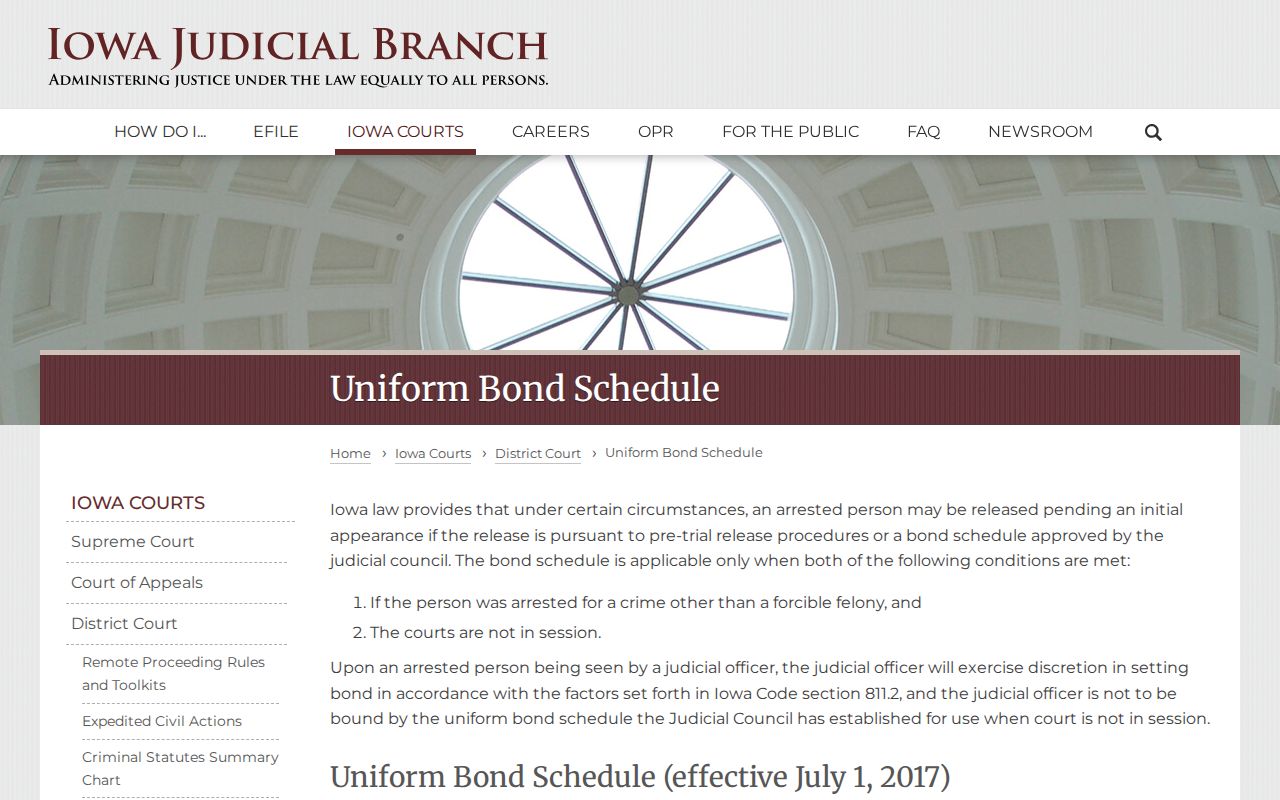
State guidance stays general. The magistrate decides, guided by the current Dallas County order. The Jail at 515-993-5815 can answer custody and bond questions, though it publishes no payment method, vendor, fee, or counter hours.
Dallas County Arrest, Summons, and Bench Warrants
These orders start from different events. Iowa sources often call a bench-type order an arrest warrant for failure to appear. “Capias” is not the term Dallas County uses.
| Tool | Basis | Effect | Response |
|---|---|---|---|
| Arrest warrant | Probable cause | Authorizes custody | Confirm court, counsel, surrender, and bond |
| Summons or citation | Process without immediate custody | Orders appearance | Appear as directed |
| Bench or FTA warrant | Missed court duty | Authorizes arrest for the failure | Ask about appearance, recall, or bond |
A missed summons appearance can trigger an FTA warrant. The docket's starting point is what matters. When a case began with a court obligation instead of a new complaint, the Dallas County bench warrant record is where to look.
Restricted Dallas County Arrest Records
Iowa court materials say cases with outstanding arrest, search, or seizure warrants can stay confidential until service. Juvenile files, sealed matters, expunged records, and protected data may also remain outside public view. Chapter 22 does not override such a rule or order. The restricted Iowa On-line Warrants and Articles system, called IOWA, serves authorized justice agencies and connects to NCIC functions. It is not a public self-search portal. Dallas County residents cannot query it directly.
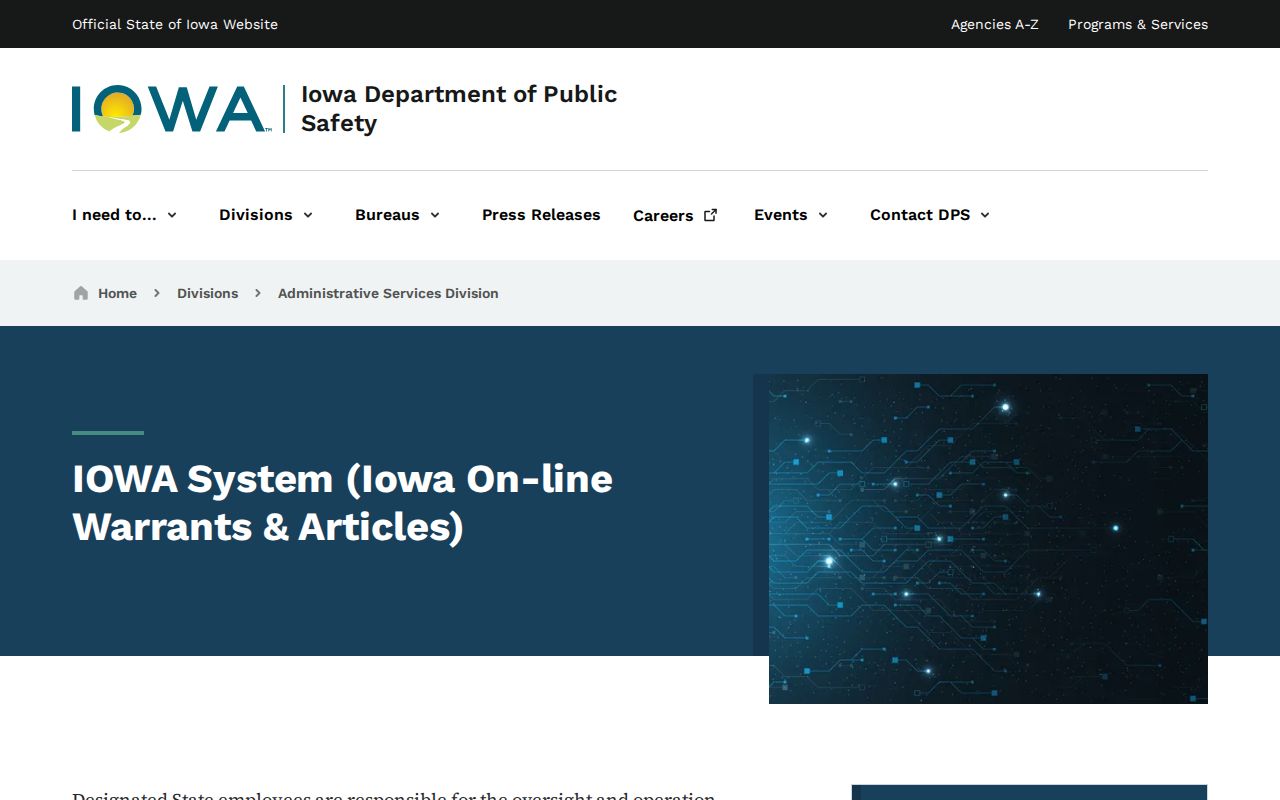
A clean browser search is not clearance. A narrow Chapter 22 request can still obtain a public agency record. For court status, the Dallas County Clerk remains the source.
Confirm Dallas County Arrest Status
Match the question to the channel that answers it. Iowa Courts Online shows dockets and case events, but it offers no public warrant filter. The Clerk at 515-993-7018 can speak to an active warrant's issue, service, return, or recall. For custody and bond questions in Dallas County, call the Jail at 515-993-5815. The Sheriff's line, 515-993-4771, handles agency routing. When you need a defined record, file the Sheriff's Chapter 22 form. Court questions can also go in person to 801 Court Street in Adel. The Jail sits at 28985 Thin Blue Line Lane, though no universal walk-in procedure is published, so call ahead.
What to Do If There Is a Warrant for You
Gather the case or citation number first. Ask the Clerk to identify the court and the warrant's current status. Then talk with counsel about a voluntary appearance, a court request, bond, or surrender in Dallas County. A lawyer can ask whether the court allows a motion to recall or quash, which withdraws or invalidates the warrant. No Dallas-specific form or filing fee is published. Paying a ticket, making a call, or filing a records request will not clear the order by itself. If surrender is required, ask the Jail what to bring, where to report, and how bond gets handled. Before you leave, get a court entry confirming service or recall of the Dallas County warrant.
Important: Confirm the Dallas County arrest warrant with the Clerk and consult counsel before appearing, since an active warrant can lead to custody.
The Dallas County warrant records process lays out the roles of both the court and the Sheriff. Bond secures release and future appearance; it does not dismiss the charge.