
Bench Warrants in Dallas County
Iowa sources call the local instrument an arrest warrant for failure to appear. A Dallas County judge or magistrate can issue one when a person willfully misses a required appearance. The docket may then show the missed setting, the warrant event, service, and a later recall. Not every lapse becomes a warrant, though. A missed payment alone is not automatically a warrant, and child-support license sanctions run through a separate Iowa process. When in doubt, ask the Clerk what the specific order actually says.
Dallas County FTA Terminology
Iowa sources do not use the term capias pro fine as the standard label here. Local legal and operational materials favor arrest warrant, warrant for failure to appear, FTA, probation, and forfeiture instead. So an out-of-state document that says capias can cause confusion. Ask the Dallas County Clerk which Iowa docket event and procedure apply to your situation.
- FTA
- Failure to appear for a required court event.
- Recall
- Court withdrawal of a warrant.
- Quash
- Court action making the warrant ineffective.
- Return
- The officer's report of execution to the court.
The exact docket sequence matters more than an informal label.
How a Dallas County Bench Warrant Is Issued
Iowa Code section 805.5 covers the trigger. Willful failure to appear in a citation matter lets the court issue an arrest warrant, which authorizes a peace officer to arrest the person and bring the matter back before the court. The case record stays with the Iowa District Court. Authorized agencies can tap the restricted IOWA System for it. Public booking data generally appears only after service, and recall or quash still requires court action.
Dallas County Missed-Court Steps
Start with your paperwork. Gather the notice, case ID, citation number, date, and county. Search Iowa Courts Online, then call the Dallas County Clerk and ask whether an FTA warrant issued, which judicial officer controls it, and what next appearance is authorized.
- Confirm the case is in Dallas County.
- Ask whether the warrant is active, served, recalled, or quashed.
- Discuss a motion, appearance, bond, or surrender with counsel and the Clerk.
- Keep the court order or receipt and confirm the final docket entry.
A ticket payment alone does not prove recall.
Bench Warrant vs Arrest Warrant
A Dallas County bench warrant grows out of a case that already exists. It's the court's response when someone misses a required appearance or another duty. An arrest warrant works differently: it starts with a complaint on a new alleged offense and a probable-cause review. Judges or magistrates issue both, and peace officers serve them.
| Feature | Bench Warrant | Arrest Warrant |
|---|---|---|
| Trigger | Missed appearance or court duty | Probable cause for an alleged offense |
| Who Issues It | Judge or magistrate | Judge or magistrate after complaint review |
| Underlying Case | Existing case | New alleged offense |
| How It Clears | Appearance, recall, or quash | Surrender, bond, and court process |
Dallas County FTA Record Sequence
The trail runs in a sequence. First the missed setting, then a docket event, warrant issuance, service or court recall, and finally the resumed case. Iowa Courts Online may show part of that trail, but it carries no warrant-status flag. Dallas County's Arrest/Inmate Inquiry can show a booking after service, not an unserved order.
Key point: Ask the Clerk for the newest controlling event, not merely whether an older page contains the word “warrant.”
Note: Dallas County publishes no update interval for its public systems, so records may lag after court action.
How to Resolve a Bench Warrant
Dallas County posts no walk-in docket, recall form, or set fee that covers every bench warrant. Confirm the warrant and its issuing court first. Then ask the judicial officer what appearance, written request, bond, or surrender is allowed.
- Call the Clerk at 515-993-7018 with the case or citation number and confirm the latest docket entry.
- Ask counsel whether a motion to recall or quash, or another court request, fits the case.
- Ask where and when to appear; no Dallas County walk-in warrant schedule was found.
- Complete the court-approved appearance, bond, payment, or other obligation and retain the resulting order.
Caution: Do not ignore an FTA warrant; it may be served during lawful police contact, and a public search may not show it.
Dallas County Courthouse Appearance
The historic courthouse at 801 Court Street is where the Clerk and District Court route runs. Expect courthouse security on the way in, including baggage X-ray and a walk-through metal detector. Call ahead. Dallas County publishes no bench-warrant walk-in hours or special recall calendar. The Court Security Division page describes screening, five courtrooms, patrolled floors, and inmate transport.
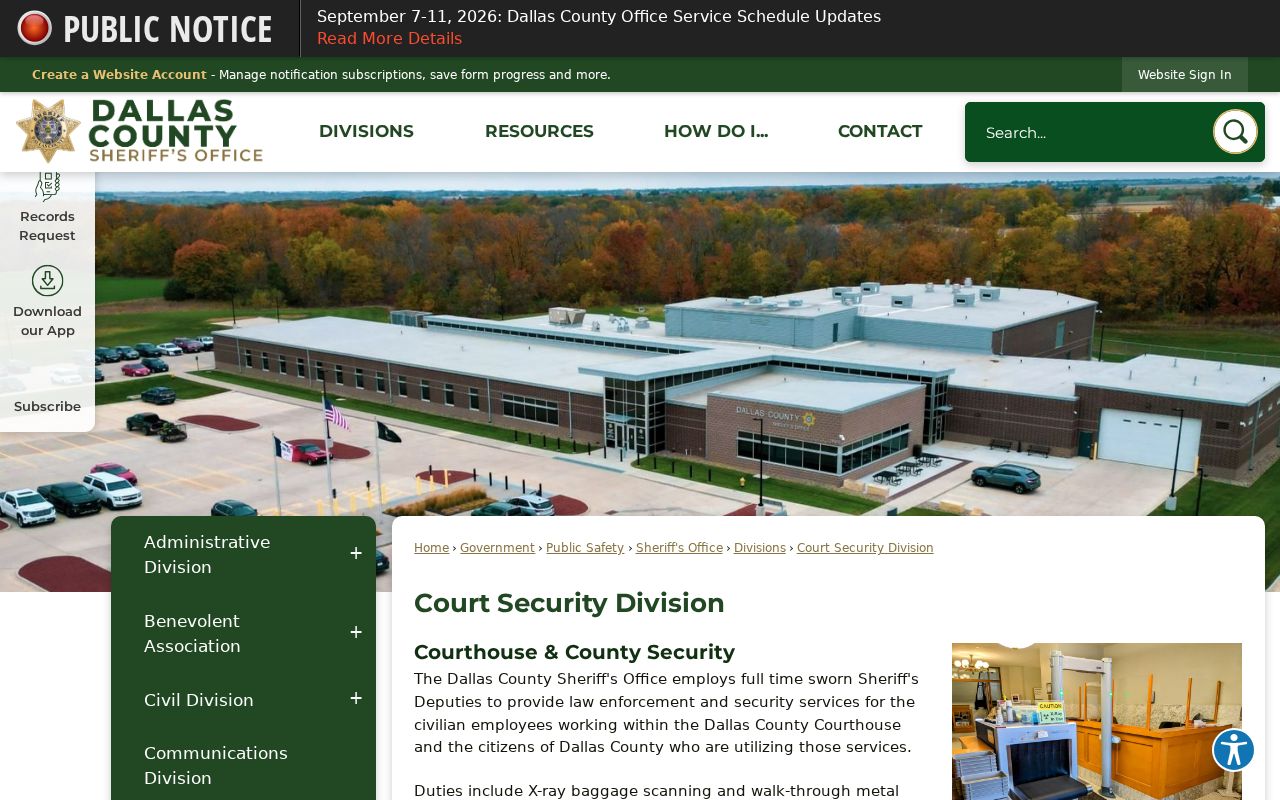
Knowing this access picture helps a Dallas County visitor prepare for an authorized court appearance. It does not promise a walk-in resolution.
Which Dallas County Court Issued It
The Iowa District Court in Dallas County controls its own warrants. The Sheriff can serve an order, and the Jail can report custody or bond, but neither office performs the judicial act that a recall or quash requires. Start with the paperwork. Read the county and venue on the citation or notice, search Iowa Courts Online, then call the Clerk. Iowa has no separate Dallas County JP or municipal criminal-court portal. Paying a city parking ticket does not clear a District Court warrant.
Dallas County Court Location
The official courthouse facility page places the Dallas County court building at 801 Court Street, Adel. The newer Administrative Building, a separate address, houses other county functions.
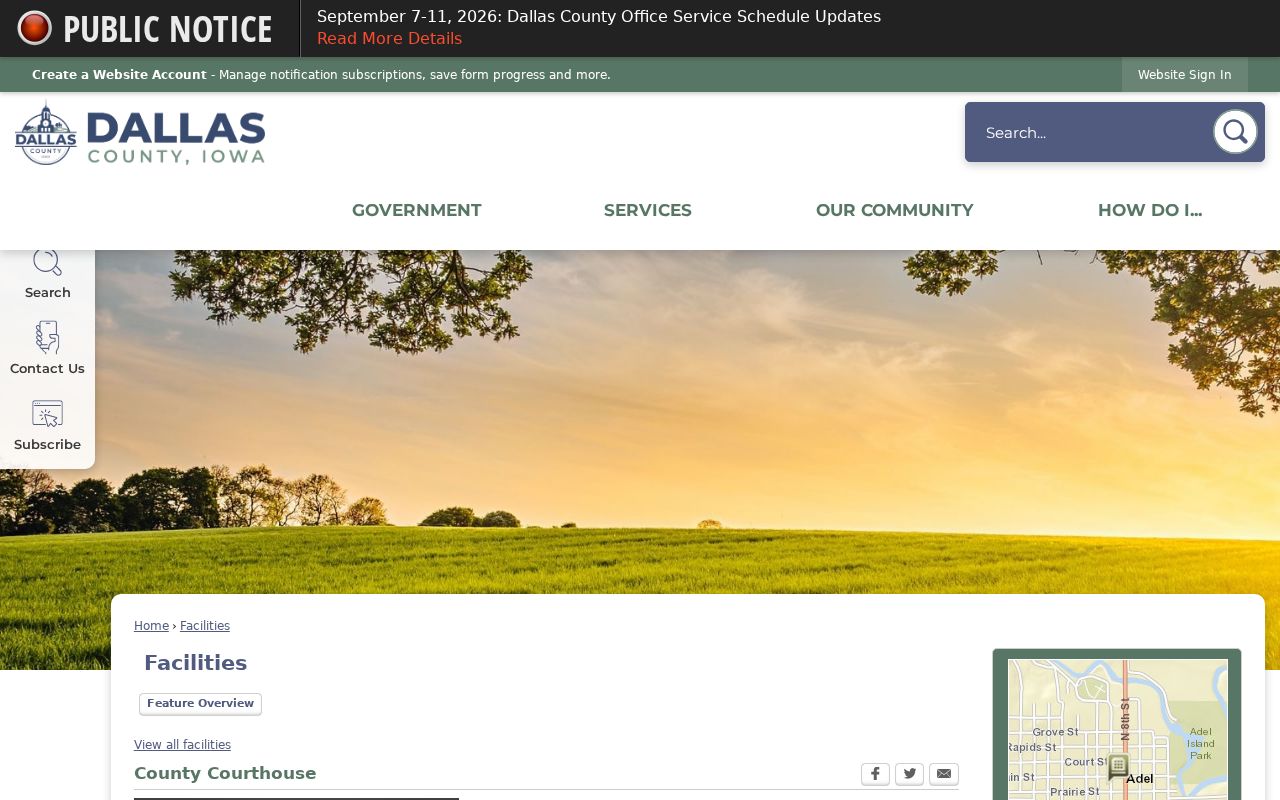
Take a bench-warrant question to the Clerk at the Dallas County courthouse, not a general administrative counter. The Administrative Building history explains why offices moved for space, access, and security reasons.
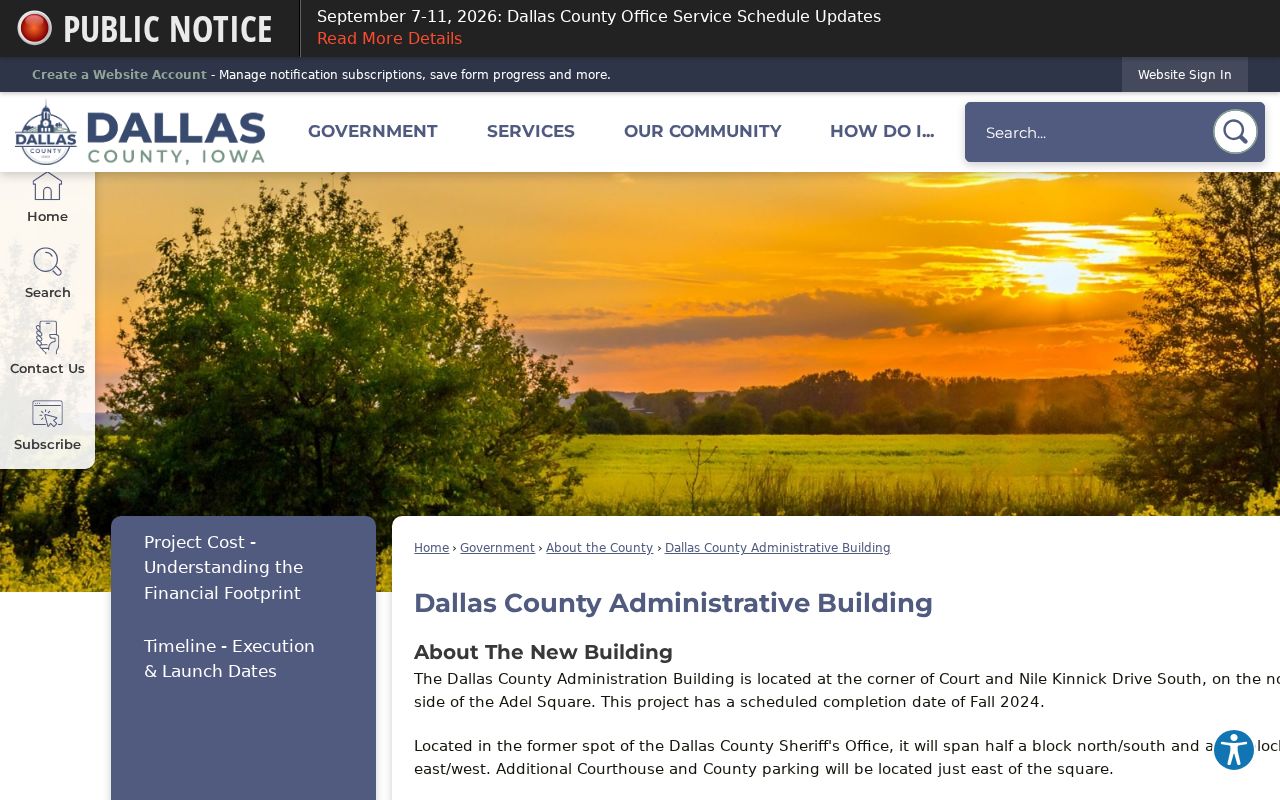
The two buildings serve different public purposes in Dallas County, so let the case venue guide your visit.
Dallas County Recall Confirmation
A Dallas County bench warrant has two layers: the warrant itself and the case underneath it. Bond is not a dismissal. A magistrate may set bail after an arrest, but the charge keeps going. Paying online can satisfy eligible court debt, yet that payment counts as a guilty plea and cannot stand in for an appearance the citation demands. The Clerk of the issuing court is the office that can confirm whether the judge recalled or quashed the failure-to-appear warrant, and what date or condition still applies. Dallas County publishes no motion-to-recall form, no filing fee schedule for one, no special warrant calendar, no surrender window, no ID checklist, and no local bond-payment rule. So ask the Clerk directly. A lawyer or a self-represented person needs to know whether the path is a written motion, a new hearing, contact with the prosecutor, a bond posting, or an arranged surrender. One more trap worth naming: the Sheriff's records form only requests records. It cannot ask a judge to recall an order, and records staff cannot direct a judge either.
If surrender is authorized, call first. Then go to the Correctional Facility at 28985 Thin Blue Line Lane. Booking there means property intake, medical screening, fingerprints, photographs, warrant verification, and release under a magistrate's bond or pretrial order, and same-day release is never promised. Ask where to report, when, what to bring, and how bond gets handled. After the court acts, get the order, receipt, bond paperwork, or whatever confirmation it issues, and ask the Clerk which docket entry shows recall, quash, service, or appearance. Booking data can lag. Sealed, juvenile, and protected records may stay closed. The court's current record controls, even when a daily report, booking result, payment page, or old saved page says otherwise. For a routine Dallas County bench-warrant question, the case number and issuing court matter more than a broad name search. The Sheriff main number is 515-993-4771; 515-993-4567 is non-emergency dispatch, not a warrant desk. Reserve 911 for emergencies. Keep every Dallas County court notice and order with the case records.