
How to Search for a Dallas County Warrant
Dallas County posts no sheriff's list of active warrants. Begin with Iowa Courts Online. Use the booking inquiry only when custody may be involved. The Clerk of Court confirms a case's status, while the Jail and Sheriff handle custody and agency routing. Before searching, gather a full legal name, exact date of birth, citation or case number, county, and any missed-court notice. Common names lead to shaky matches. A lawyer can help someone act on a possible warrant without treating a public result as final.
- Confirm Dallas County is the venue on the citation, summons, or court notice.
- Search Iowa Courts Online by case ID or citation when possible; use name and DOB with care.
- Check the Dallas County Arrest/Inmate Inquiry only for booking and custody facts.
- Call the Clerk at 515-993-7018, Jail at 515-993-5815, or Sheriff at 515-993-4771 as the question requires.
- Request a defined public record under Iowa Code Chapter 22. The IOWA System is restricted to justice agencies.
Dallas County Court Search Routes
Iowa Courts Online offers several routes. Name search requires at least two letters of the last name, and the official help permits a percent wildcard. DOB search works differently. It needs the exact date of birth plus last and first name. A case ID or citation works even better when paperwork supplies it. The official Iowa Courts Online screen is the trial-court search that covers Dallas County cases.
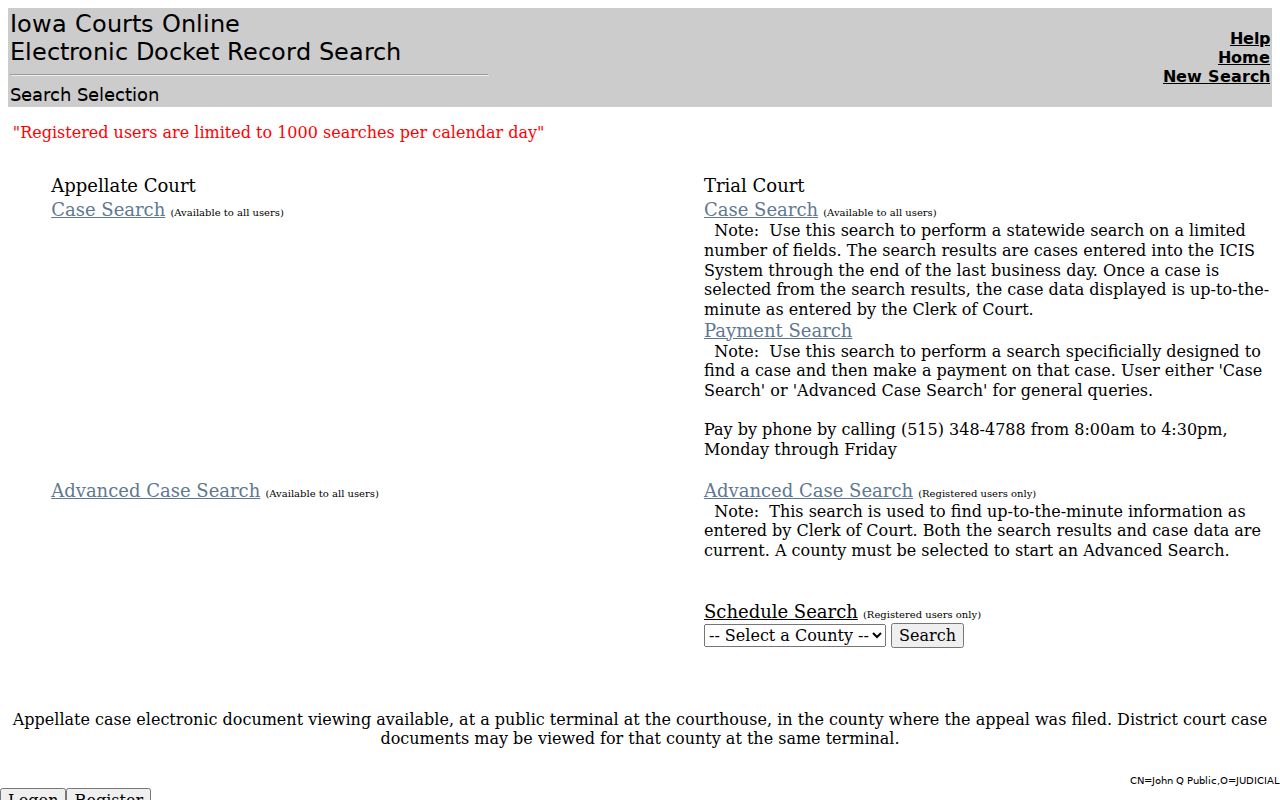
The screen has no warrant-status checkbox, so a docket result still needs Clerk confirmation.
Dallas County Warrant Search Fields
The Arrest/Inmate Inquiry uses custody fields, not a warrant filter. It can find a booking Dallas County has already recorded, but it cannot rule an unserved warrant in or out.
| Field Label | Type | Required | Notes |
|---|---|---|---|
| Name | Text | Unspecified | No exact-match instruction was visible. |
| Subject Number | Text | Unspecified | Booking-system identifier. |
| Booking Number | Text | Unspecified | Booking identifier. |
| Booking From / To | Date | Unspecified | Limits the date range. |
| Housing Facility | Select | Unspecified | Captured option names the new county jail. |
Dallas County Booking Search Limits
The booking portal caps results at 100 at a time. That number is not a Dallas County warrant count. Confirm anything you find with the arresting agency or Iowa Courts Online. The Sheriff Daily News Report index holds dated operational reports rather than a full warrant list.
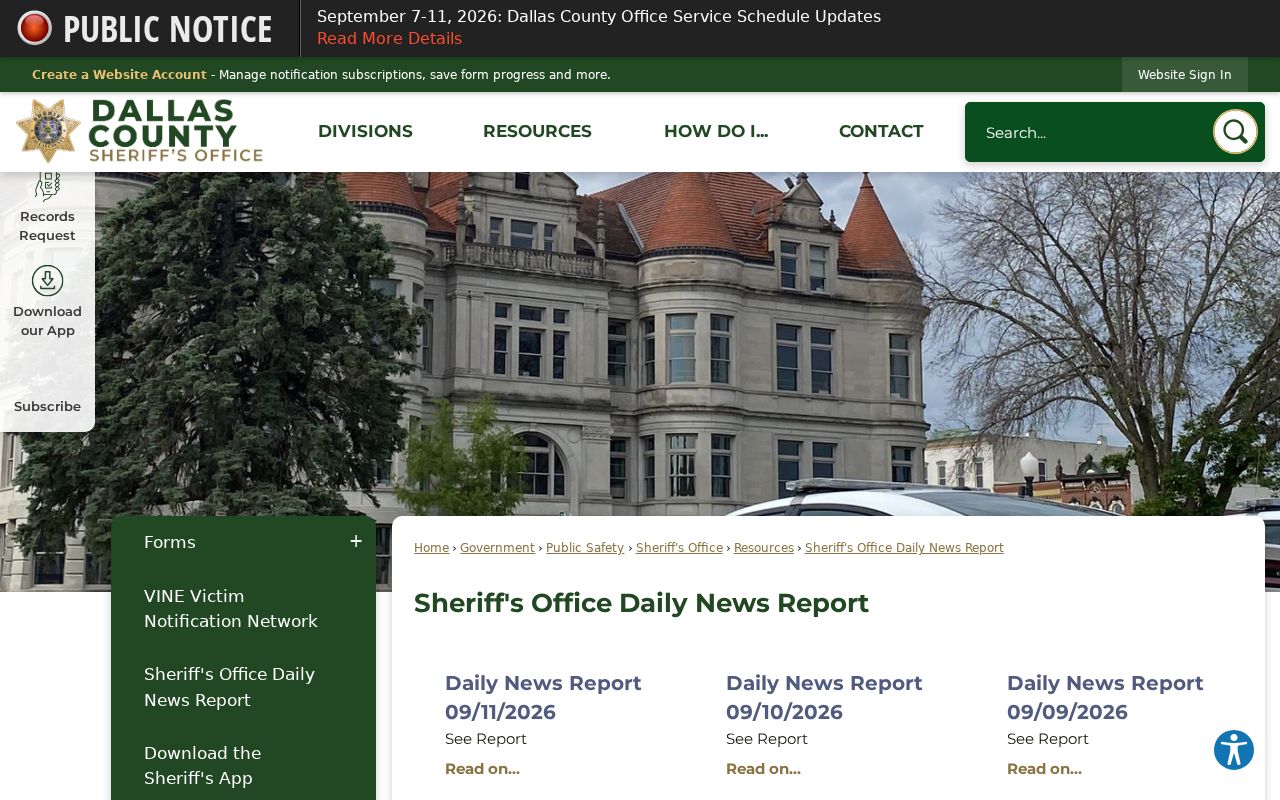
Labels such as FTA and WARRANT provide system context without establishing present court status.
What a Warrant Search Returns
A public record may list an identifier, issue or event date, issuing court, charge, bond data, agency, and later service or disposition. Dallas County results vary. Not every field is public or present.
| Identifier | Warrant number if exposed, or a 17-character case ID |
|---|---|
| Charge / Reason | Offense, FTA, probation, or forfeiture label |
| Issuing Court | Iowa District Court and judicial officer when public |
| Bond | Amount and type, which do not dispose of the case |
| Status | Active, served, returned, recalled, or quashed when shown |
Dallas County Identifier Differences
A booking number belongs to the jail system. A case ID marks an Iowa court file, and a citation number marks a ticket. A warrant number can exist without appearing in either public interface for Dallas County. Give the Clerk the number and its document type.
- Case ID
- A court-file identifier tied to county and case type.
- Citation number
- The number printed on a citation.
- Booking number
- A jail key, not current warrant status.
- FTA
- Failure to appear, which may produce a warrant.
Exact identifiers beat a broad name search for Dallas County records, especially when the name is common.
Where Dallas County Warrants Are Checked
The Clerk at 801 Court Street in Adel holds District Court criminal, traffic, citation, filing, bond, and docket records. Iowa has no Dallas County municipal or JP portal. Its judicial magistrates sit within the unified District Court. The Jail handles intake, booking, warrant checks, and custody. The restricted IOWA System serves authorized justice agencies and links to NCIC, so it is not a public statewide search.
Dallas County Sheriff Resource Gap
The Sheriff resources page links forms, VINE, daily reports, an app, and booking tools. It carries no active-warrant search or most-wanted tab. Skip the hunt for a hidden roster. Use the official fallback chain instead, which the Sheriff resources page lays out for the public.
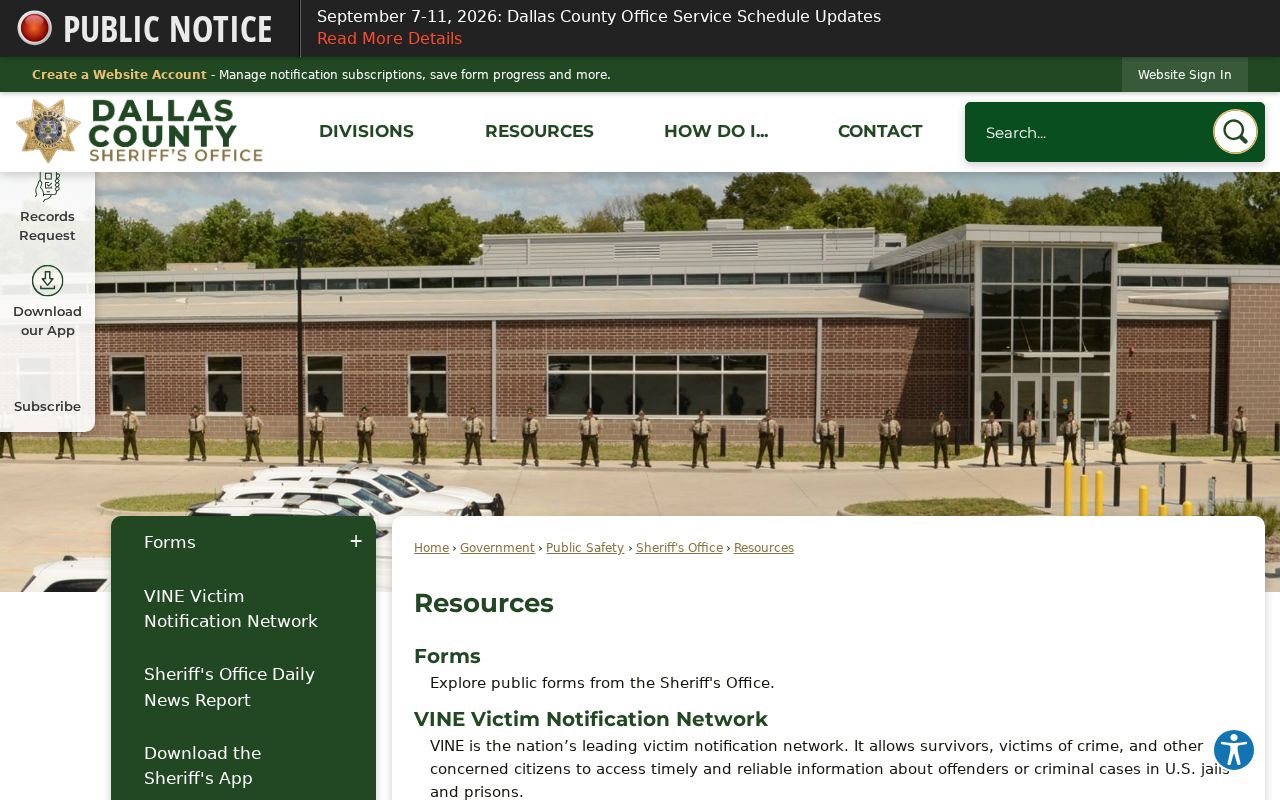
These Dallas County tools back direct confirmation and narrow records requests, not a full public warrant export.
Access and Restricted Warrants
Iowa Code Chapter 22 opens public records in general. Court rules still seal cases, juvenile files, personal data, and some unserved-warrant or investigation material. A clean Dallas County search can end inconclusive.
Key Rules:
Sealed and some unserved warrants may be withheld to protect a case or investigation.
Juvenile records are restricted under Iowa law and court rules.
Absence from a public search is not proof that no warrant exists.
The Sheriff records form covers a defined law-enforcement record. For court material, ask the Clerk or follow Judicial Branch public-record guidance; Dallas County publishes no fixed request fee or turnaround time.
Dallas County Direct Confirmation Checklist
Direct confirmation in Dallas County means asking each office the question it actually controls. The Clerk of Court can tie a name to a District Court case, read a docket entry as issuance, service, return, recall, or quash, and tell you which judicial officer holds the next step. The Jail answers custody and bond questions once a warrant has been served. The Sheriff's Office handles law-enforcement questions and formal records requests. Asking one Dallas County office to do another's legal work just slows things down. For a missed appearance, give the Clerk the citation or case number, the date of the setting, the full name, and the exact date of birth, then ask whether appearance is still required, whether counsel may file a motion, and what record will show final resolution. For custody, ask the Jail whether the person is held now and which magistrate or court set bond. A bond amount does not dismiss a charge. Chapter 22 requests work best when they name a specific public document and a narrow date range. The Sheriff's form allows pickup or email, notes that pickup charges can apply, and warns that the submitted form may itself be public. No fixed turnaround or price is stated. Judicial records go through the Judicial Branch process, the Clerk, or a courthouse public terminal, and everything remains subject to confidentiality and redaction.
A relative helping in Dallas County faces the same privacy limits. Staff can share public information, while sealed, juvenile, protected, and unserved material stays off limits. The real finish line is a current answer from the Dallas County office that controls the record, plus any court order, bond paper, receipt, or notice issued in the case. A saved copy of a page is handy for reference. It is not a court order, though, and never proves clearance. Non-emergency dispatch at 515-993-4567 is not a published warrant desk, so use office-specific calls for routine status checks and 911 only for emergencies. The records email is records@dallascountyiowa.gov; include a narrow description, a date range, and any known identifier. Records staff do not decide warrant status. The Clerk remains the court-contact route for a current answer on any Dallas County warrant.